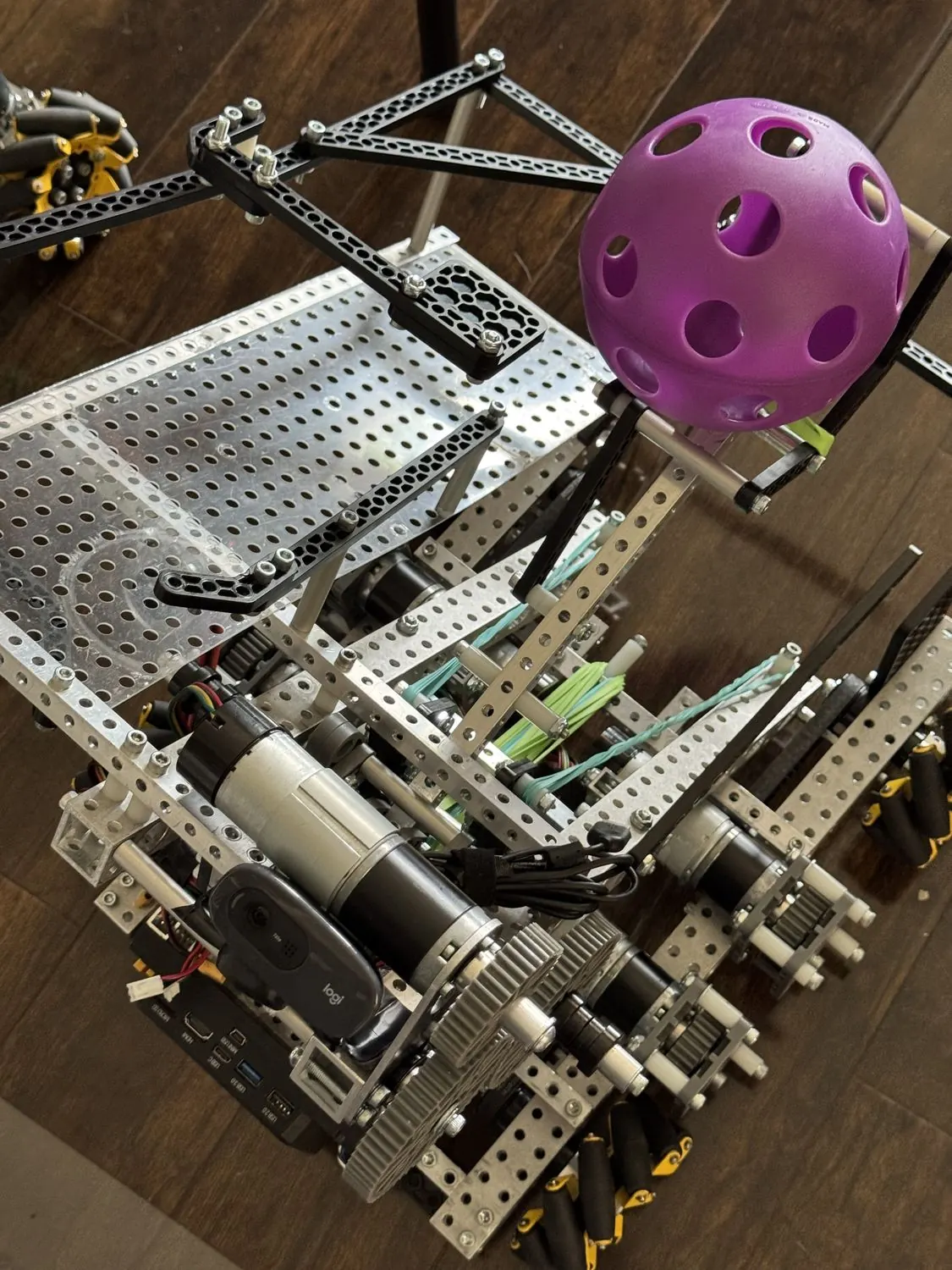
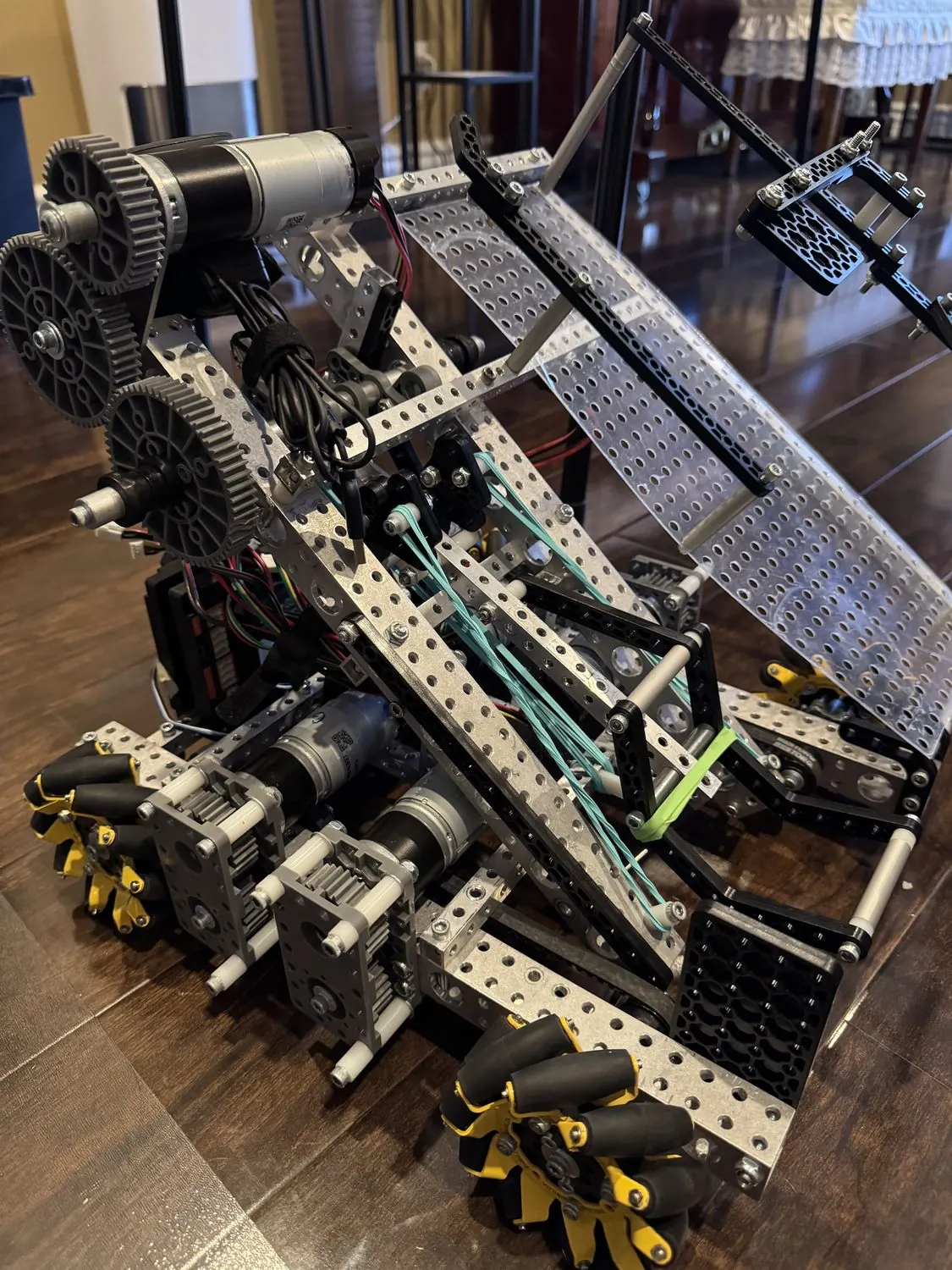
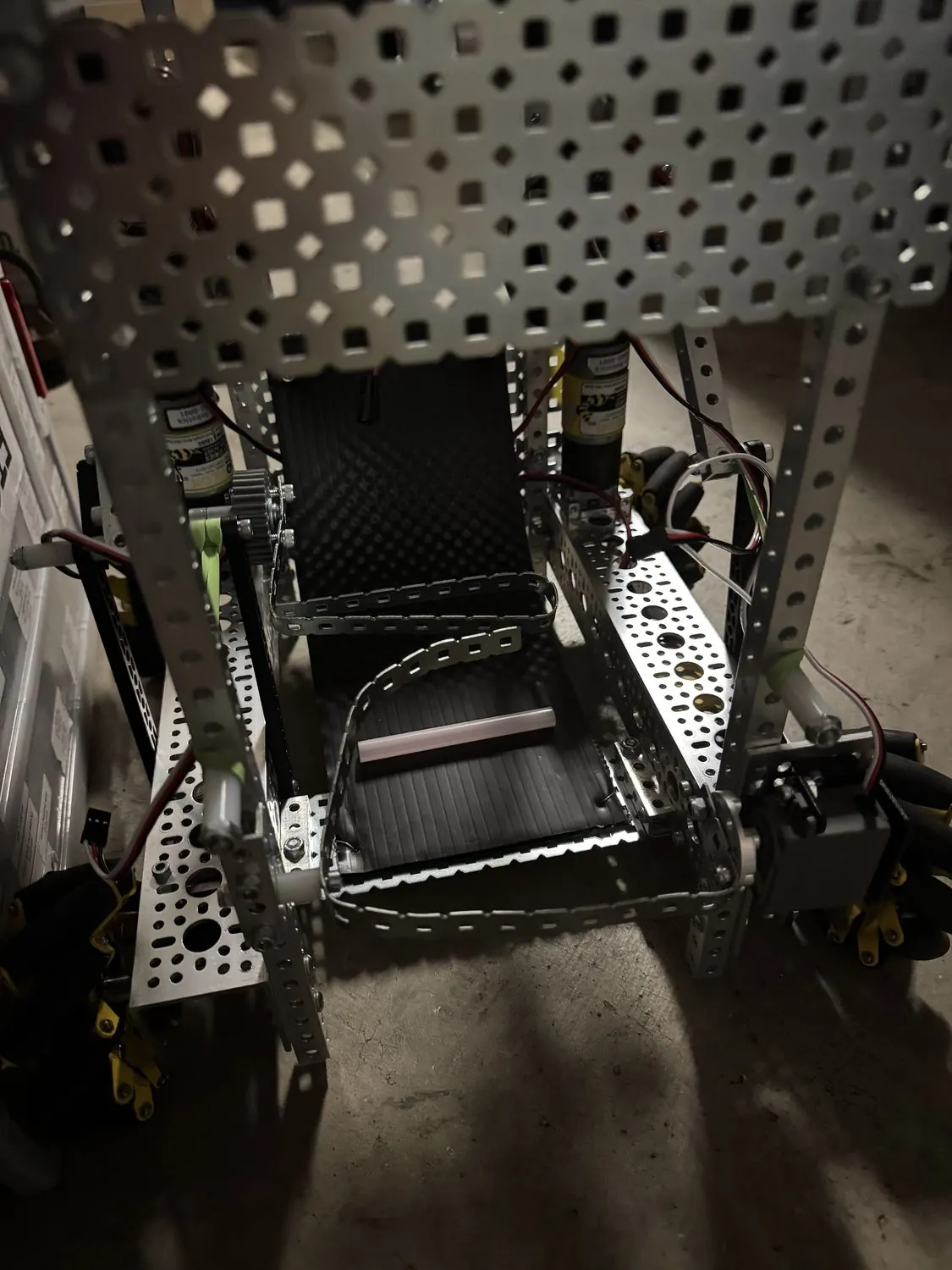
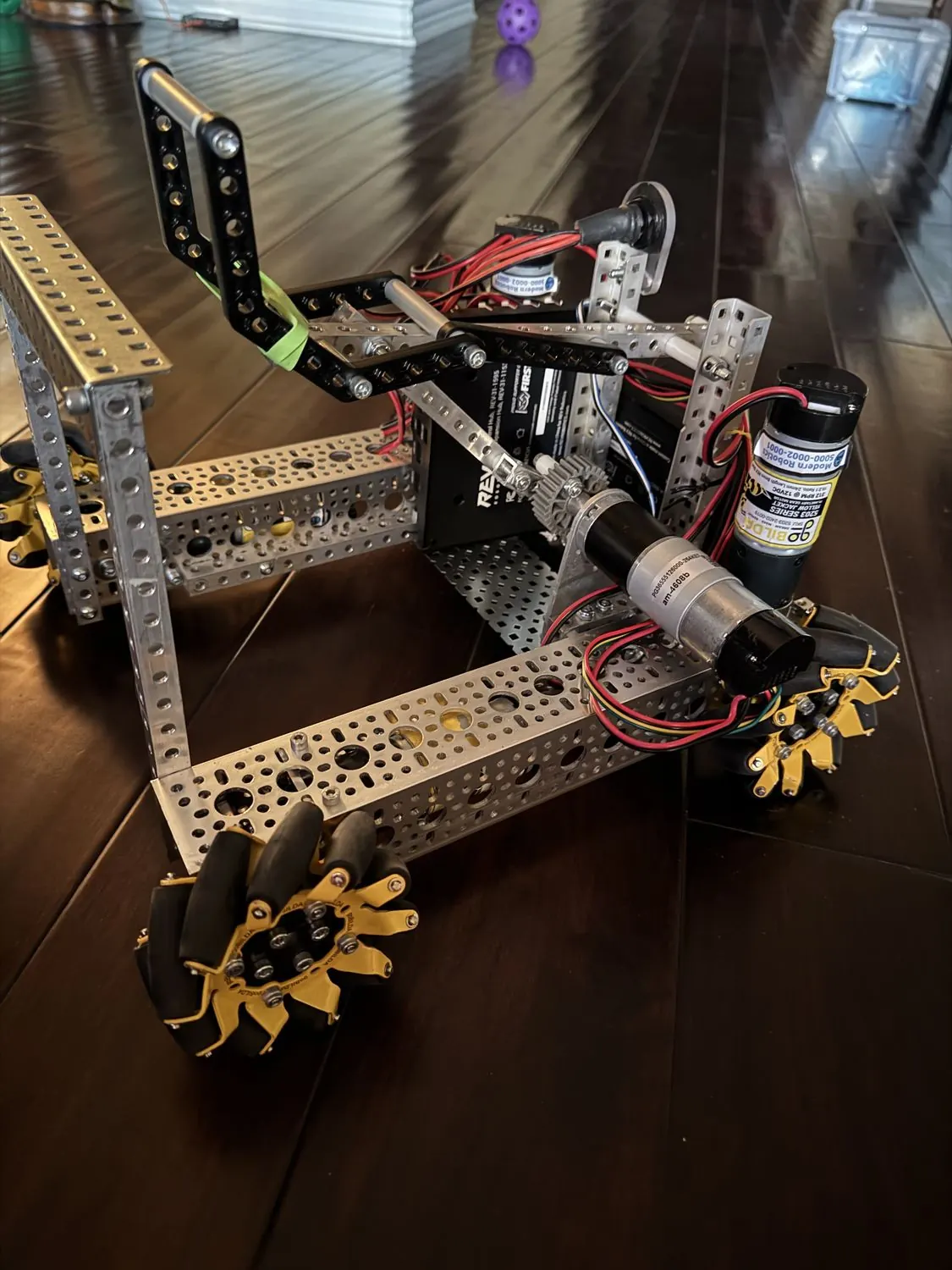
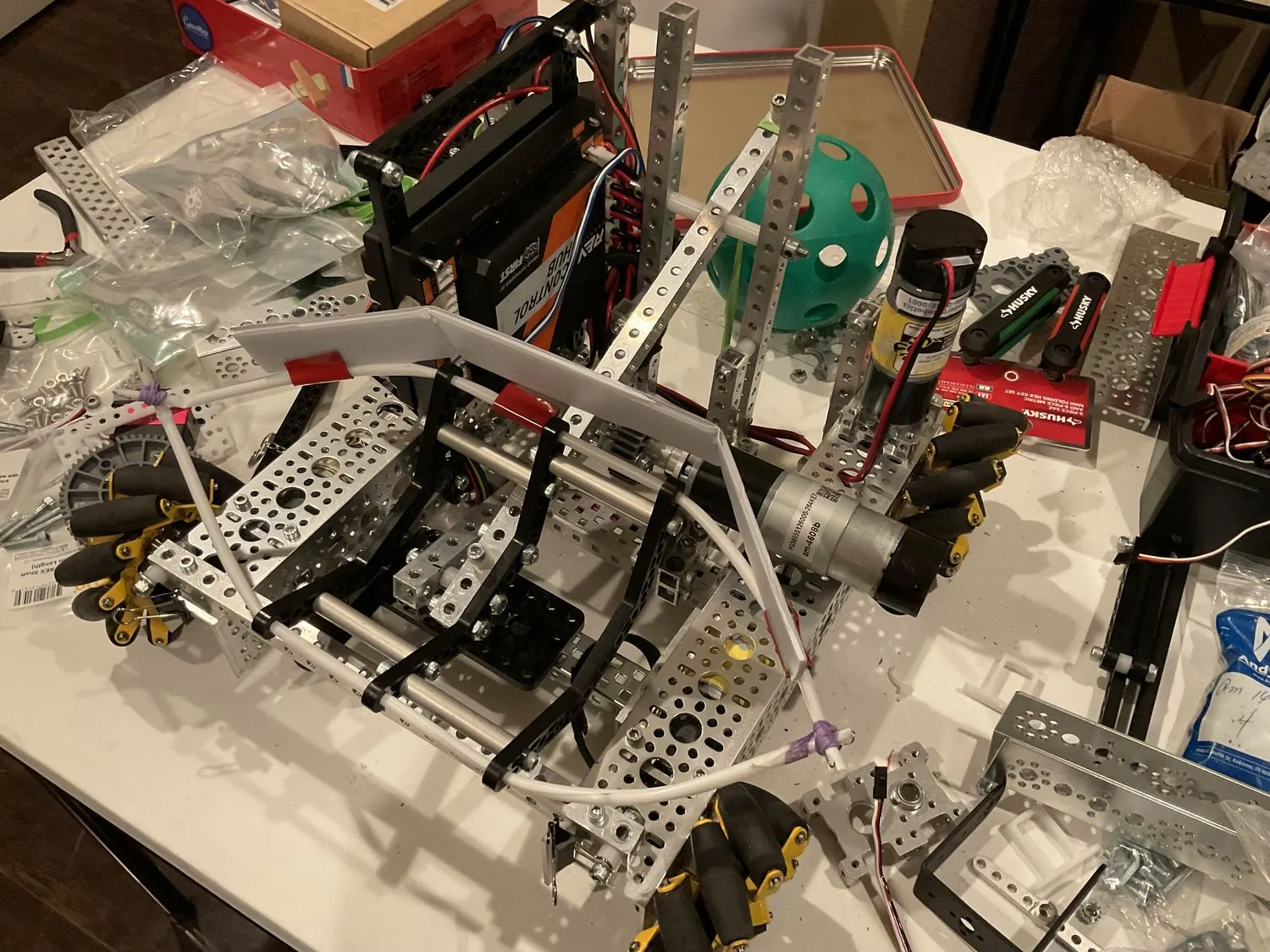
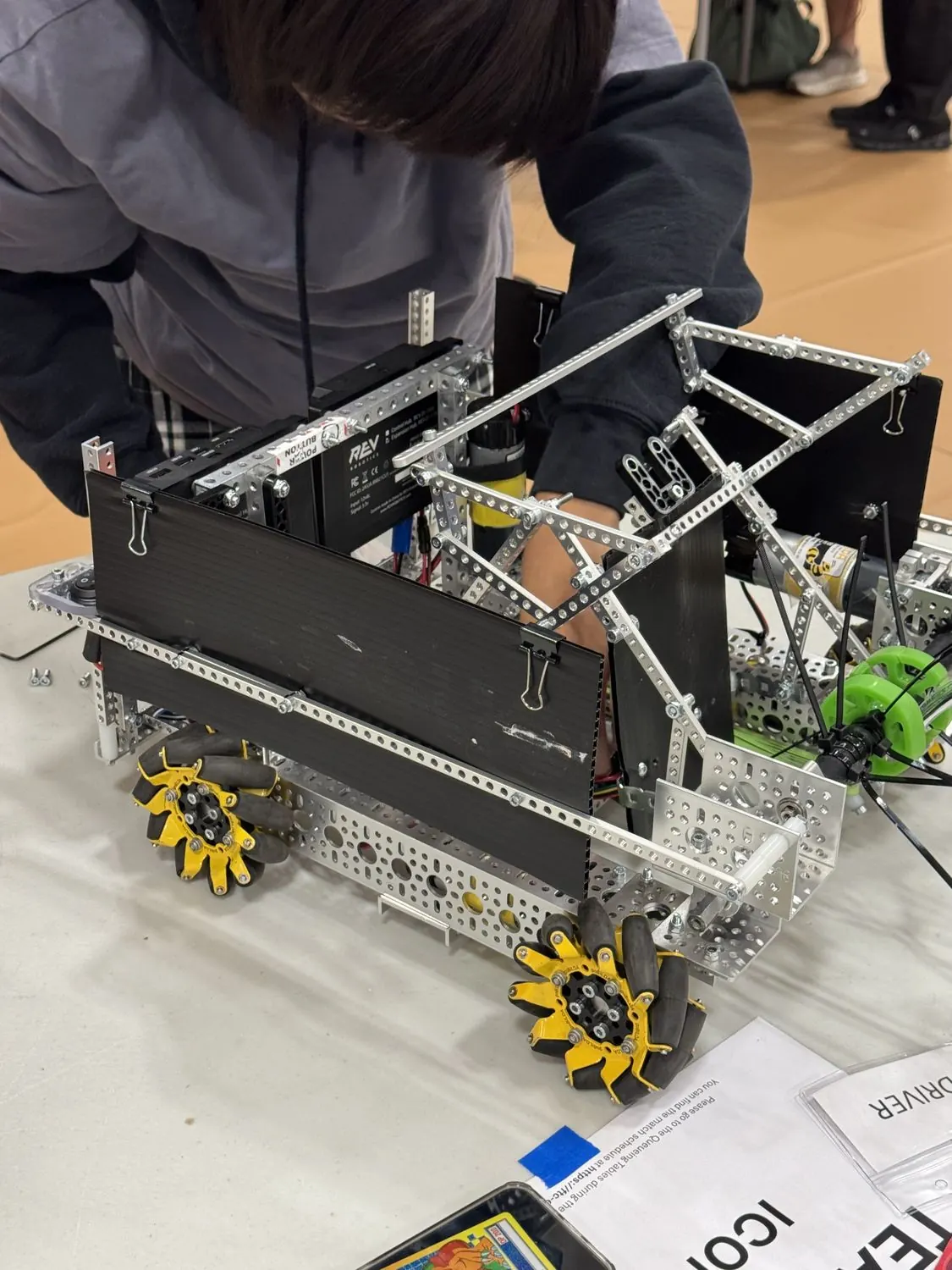
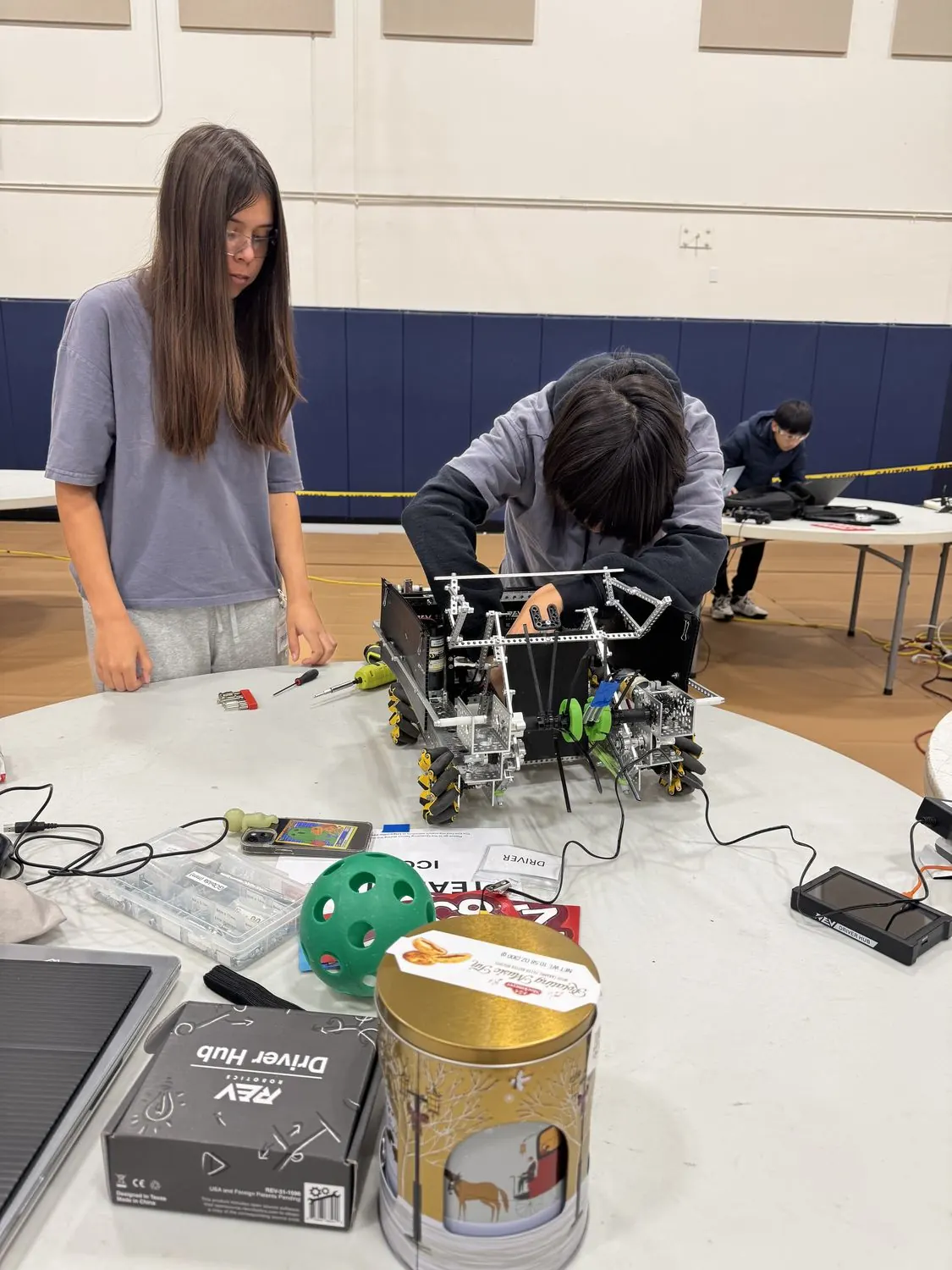
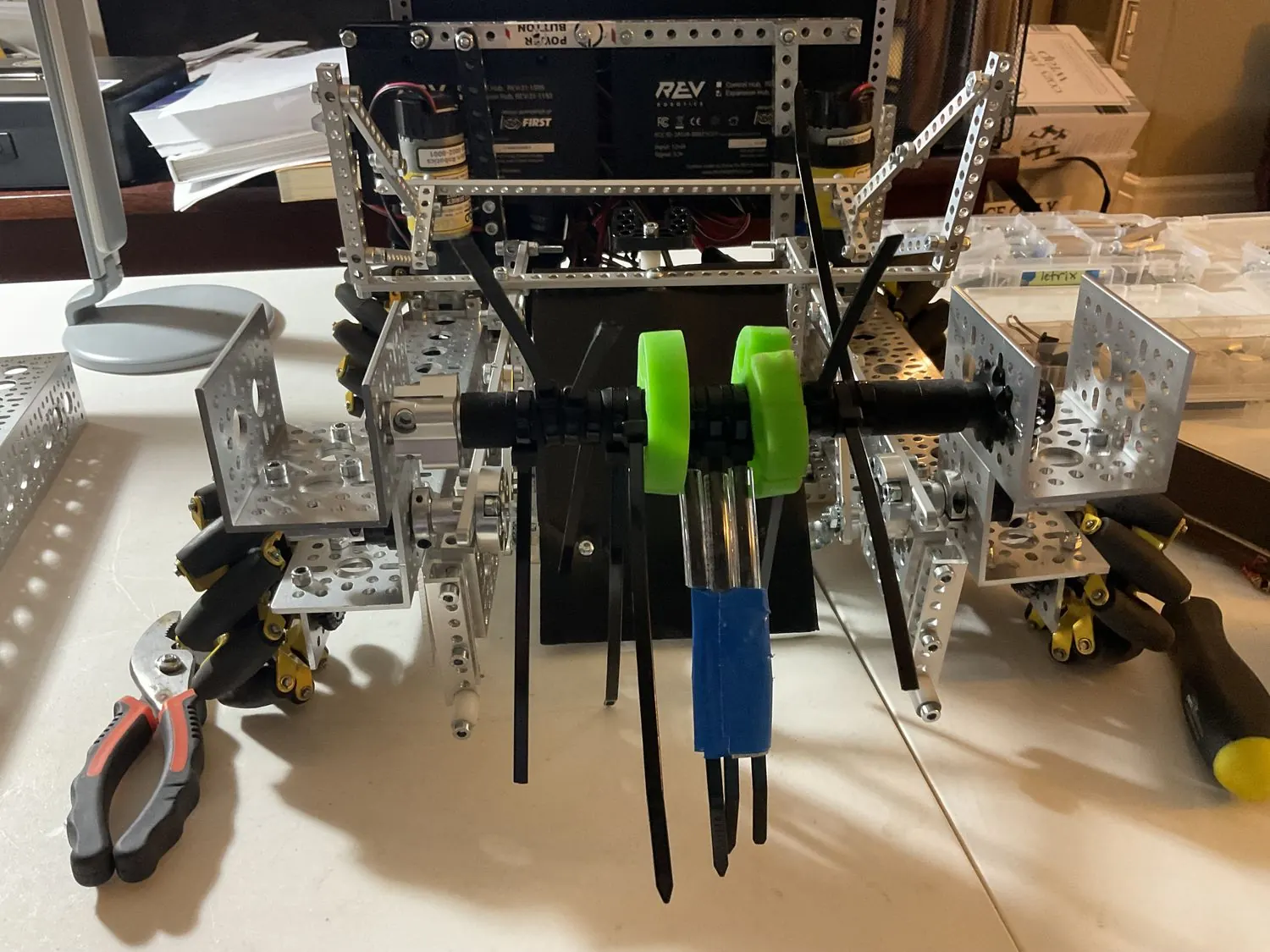
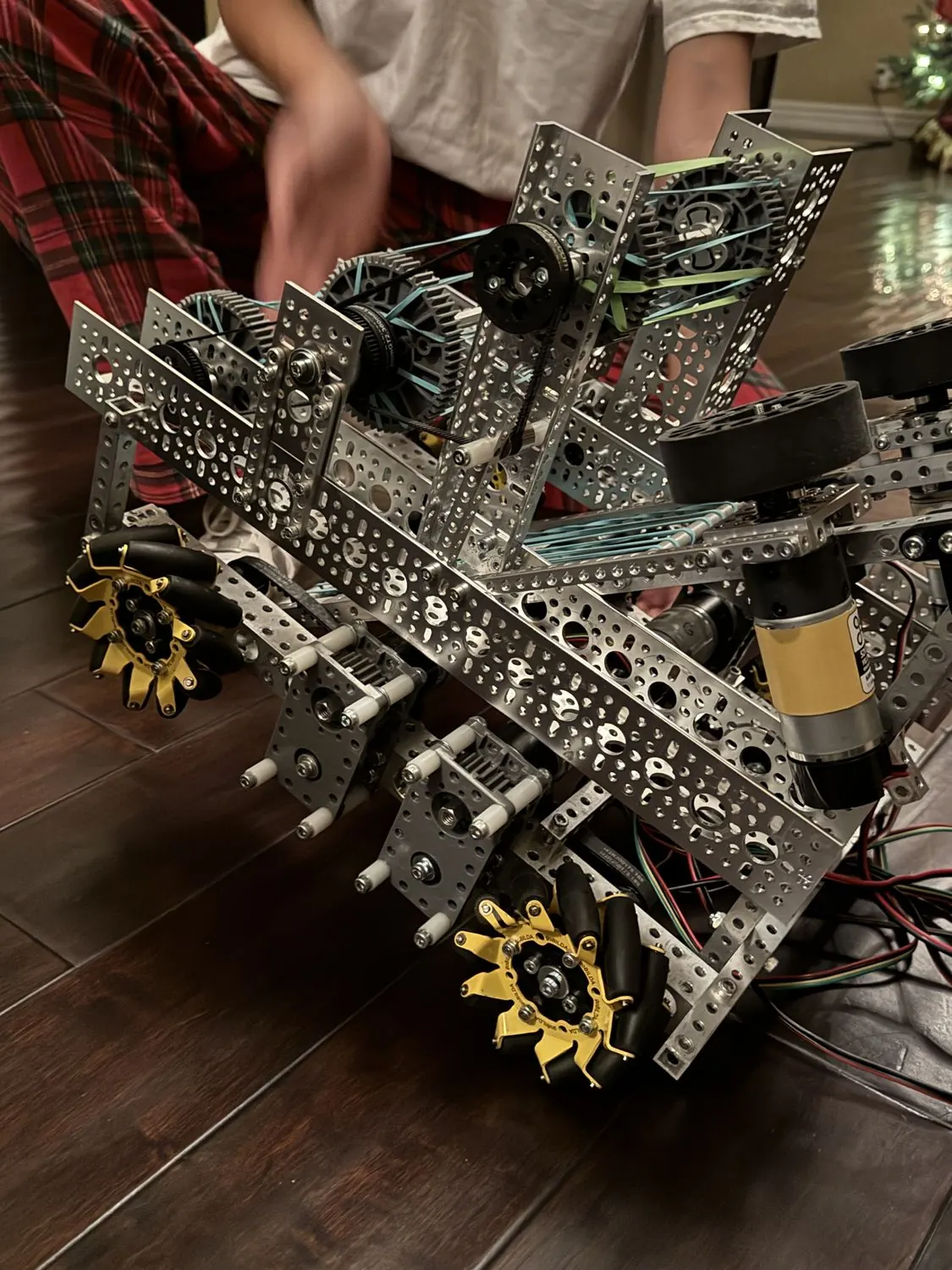
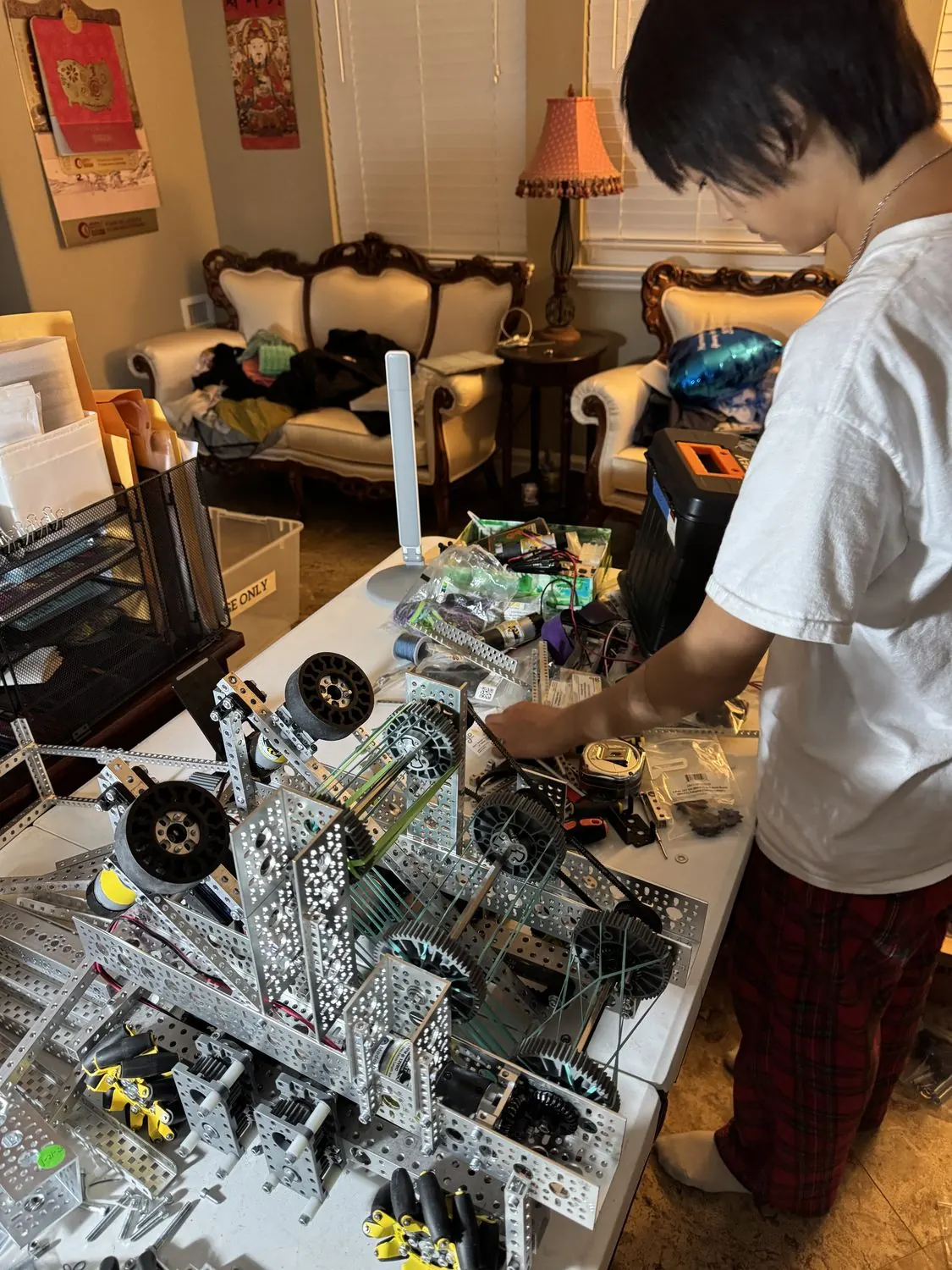
The Robot
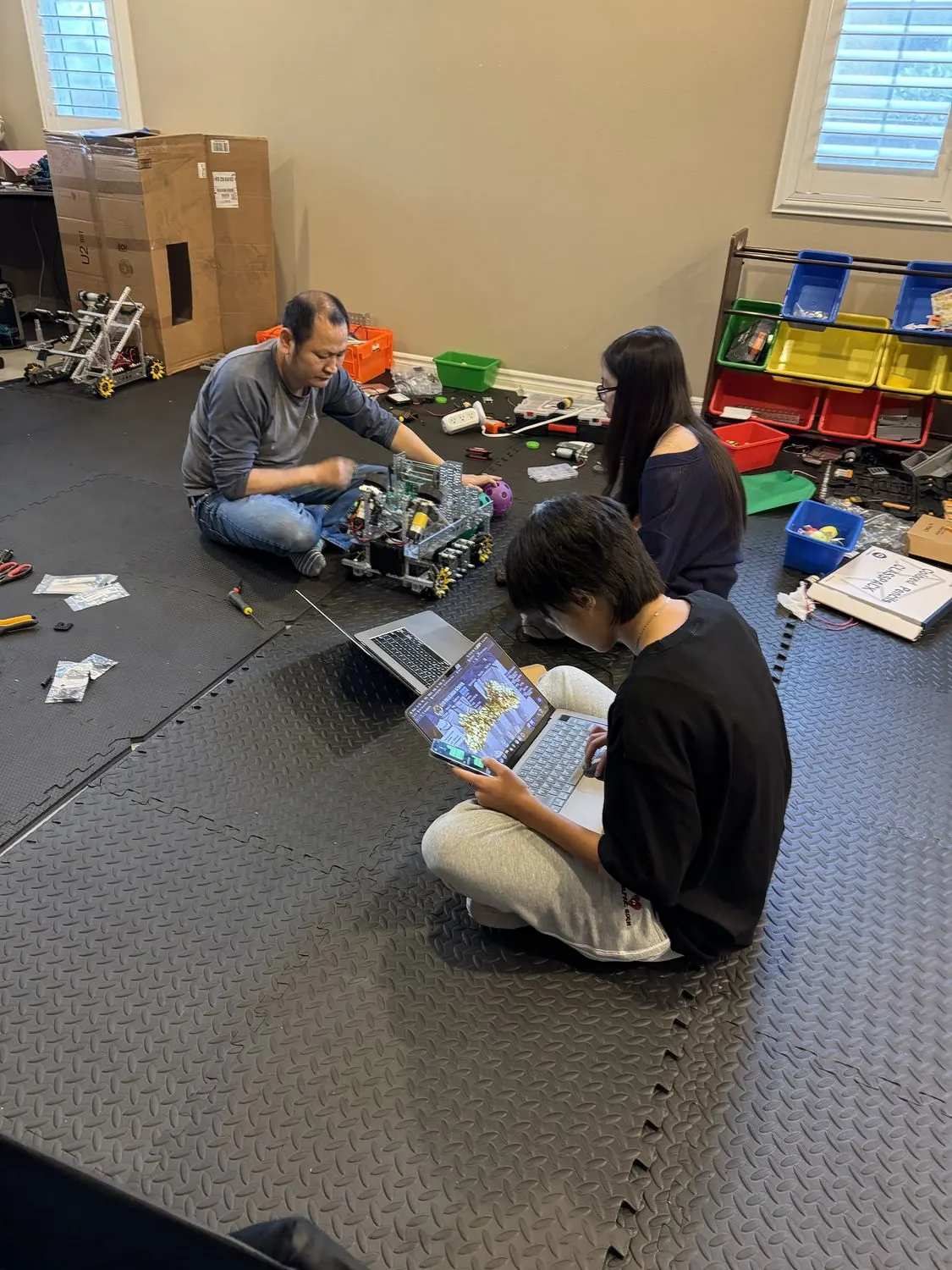
Every Iconic robot is designed, built, wired, coded and driven by students. We iterate fast and test constantly, prioritizing reliability, agility and scoring consistency.
BIOBUZZ Is in Build
This season's game, BIOBUZZ presented by RTX, is part of FIRST CANOPY. Robots score Pollen, plastic balls about three inches across.
Pollen behaves a lot like last season's artifacts, so our launcher and intake experience carries straight over. We will post our design, iterations and code here as the robot comes together.
DECODE, in Five Versions
We rebuilt the robot four times. Here is how each version led to the next.
- V1
Concept Prototype
A small, lightweight push bot with a simple intake.
- V2
Working Prototype
A rubber band catapult launcher, inspired by the AndyMark starter bot.
- V3
Structural Upgrade
A compact catapult that dropped the rubber bands.
- V4
Structural Upgrade
A refined catapult. The motors overheated and the intake was unreliable, which pushed us to rethink.
- V5
Competition Robot
A goBILDA gecko wheel launcher that holds three artifacts, fed by a rubber band and gear intake.
At a Glance
| Season | 2025 to 2026, DECODE presented by RTX |
|---|---|
| Versions built | Five, from push bot to competition robot |
| Drivetrain | Mecanum, four goBILDA 5203 motors |
| Launcher | goBILDA gecko wheels with two calibrated shot modes |
| Capacity | Three artifacts |
| Intake | Vertically staged, driven by rubber bands and gears |
| Controller | REV Control Hub |
| Autonomous | Time-based routines built from reusable move functions |
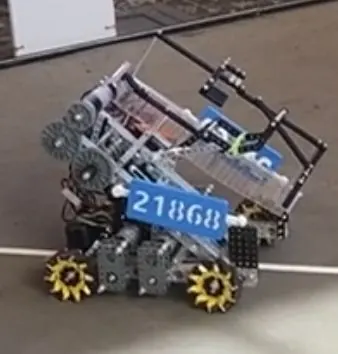
Subsystems
Drivetrain
A mecanum drivetrain driven by four goBILDA 5203 motors moves in any direction, which made scoring alignment faster and cut down on turning time.
A reinforced cross-member chassis resists twisting, and the battery sits low and centered for stability.
Intake and Scoring
A vertically staged intake, driven by rubber bands and gears, compresses, carries and steadies each artifact before launch.
A passive holding stage between the two gecko launcher wheels keeps artifacts from being over-compressed. The result was fewer jams, less motor strain and more repeatable shots.
The Code
How the robot thinks during driver control and on its own.
TeleOp
- Mecanum control for driving, strafing and rotating
- The intake runs continuously while a button is held
- Two calibrated launcher modes for near and far shots
- A servo ball holder cycles between HOLD and FIRE, then resets on its own
Autonomous
- Time-based control built from reusable functions like
forward(),backup(),strafeLeft()andturnLeft() - Each move runs the motors at a set power for a set time, then stops every motor to prevent drift
- A dedicated scoring routine coordinates the holder servo, intake feed and launcher for repeatable shots
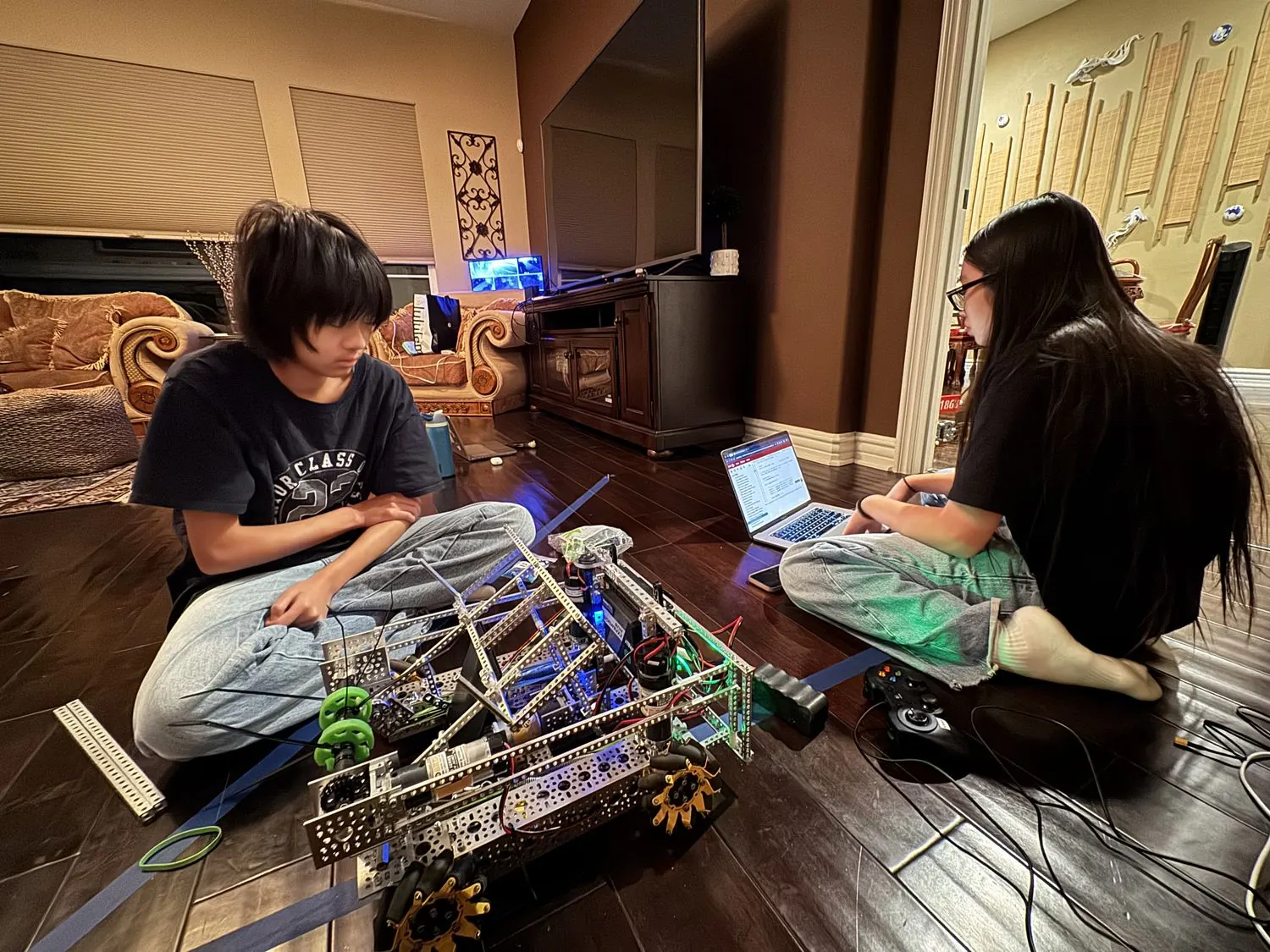
From the Build
Select a photo to see it larger, then use the arrow keys to move through them.